
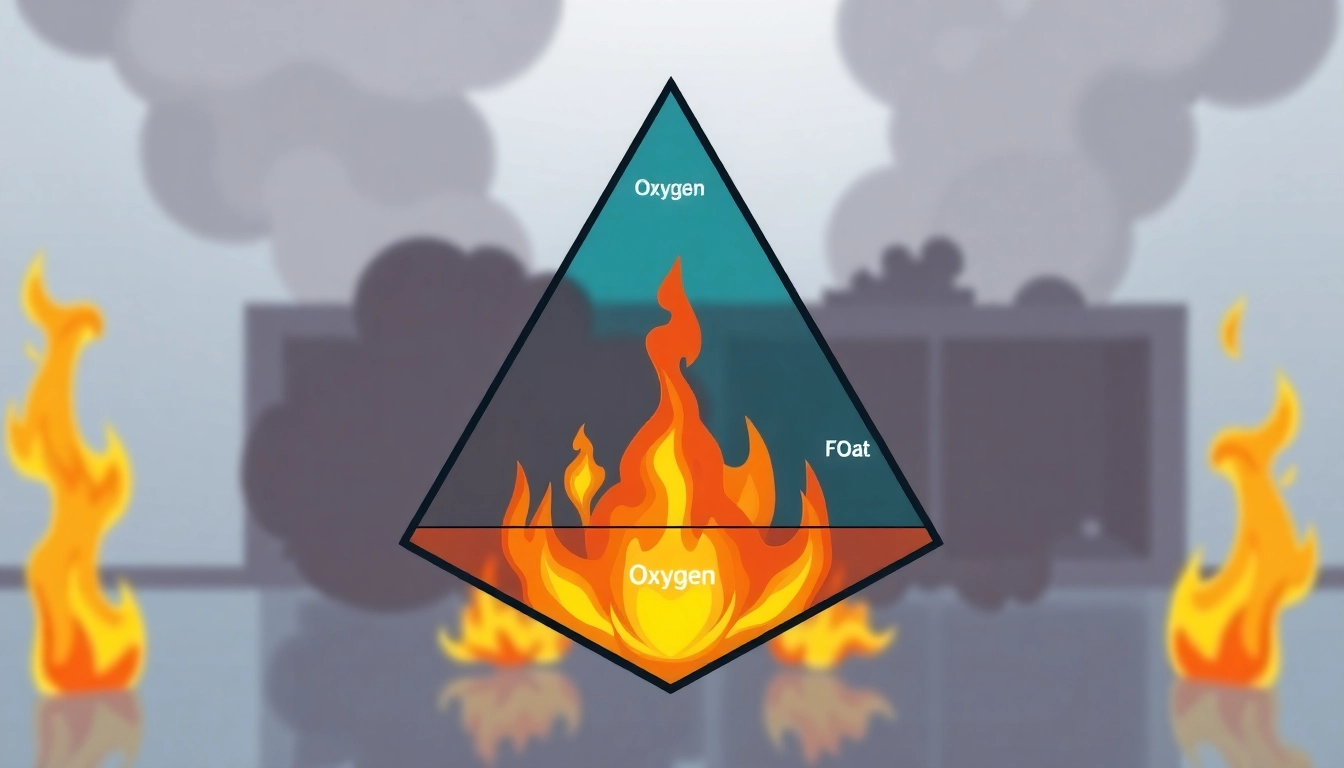
1. What is the Fire Tetrahedron?
1.1 Definition of Fire Tetrahedron
The fire tetrahedron is a fundamental concept in fire science that encompasses the four elements necessary for the initiation and sustenance of fires: heat, fuel, oxygen, and the chemical chain reaction. This model serves as a visual and theoretical framework, expanding on the earlier fire triangle model. In essence, without any one of these components, a fire cannot start or be maintained.
1.2 History and Evolution from Fire Triangle
The fire triangle, established as a basic model of fire behavior, includes three essential components: heat, fuel, and oxygen. While this model provided a good foundational understanding, it fell short in explaining certain fire behaviors, particularly in chemical reactions that sustain combustion. This led to the introduction of the fire tetrahedron, which incorporates the chemical chain reaction as the fourth element, highlighting the complexity of fire dynamics.
1.3 Importance in Fire Safety
Understanding the fire tetrahedron is crucial for effective fire prevention and safety. By recognizing how each component interacts, one can implement effective strategies to extinguish fires or prevent their occurrence altogether. This knowledge is not only beneficial for firefighters and safety professionals but also for every individual who wishes to enhance their fire safety practices at home or in the workplace.
2. The Four Components of the Fire Tetrahedron
2.1 Role of Heat in Fire
Heat is the energy that raises a material’s temperature to its ignition point, causing it to combust. Heat can be generated through various means such as friction, electrical sparks, or open flames. For an effective fire prevention strategy, it is essential to control sources of heat in potential fire-prone environments.
2.2 Significance of Oxygen
Oxygen is a vital component of fire, typically sourced from the surrounding air (which contains approximately 21% oxygen). Fire requires a minimum concentration of oxygen to sustain combustion. Reducing oxygen availability in enclosed spaces, such as through ventilation control, can be an effective fire suppression strategy.
2.3 Understanding Fuel
Fuel can be any combustible material, ranging from solids like wood and paper to liquids and gases such as gasoline or propane. The characteristics of the fuel, including its ignition temperature, storage method, and environmental interactions, significantly influence fire risk and behavior. Thus, managing fuel sources is a key aspect of fire safety risk management.
3. The Chemical Chain Reaction
3.1 What is Chemical Chain Reaction?
A chemical chain reaction in fire refers to a process wherein heat generated from the initial combustion reaction produces more heat, sustaining the fire by continuing to ignite newly available fuel. This self-sustaining aspect of fire underscores the significance of controlling each component of the tetrahedron to prevent escalation.
3.2 How it Affects Fire Behavior
The strength and progression of a fire can often be attributed to the effectiveness of the chemical chain reaction. As the fire expands, additional fuel comes into contact with the heat source and oxygen, often leading to rapid fire spread. Understanding this dynamic is key for anyone involved in fire prevention or firefighting.
3.3 Implications for Fire Prevention
Recognizing the role of chemical reactions in fires allows for more effective fire prevention measures. By interrupting any one of the tetrahedron’s elements, fire can be effectively contained. This includes strategies like removing fuel sources, employing cooling measures to lower temperatures, or displacing oxygen through various methods.
4. Applications of the Fire Tetrahedron in Fire Safety
4.1 Fire Extinguishment Techniques
Various fire extinguishment techniques rely on interrupting the fire tetrahedron. For instance, water extinguishes fire primarily by removing heat and diminishing the temperature of the burning material. Other techniques may use foam to blanket the fire and remove oxygen or chemical extinguishers to disrupt the chemical chain reaction.
4.2 Fire Safety Education
Fire safety education programs often incorporate the fire tetrahedron concept to teach individuals about fire safety. This education enables participants to understand how behaviors and environmental factors influence each of the tetrahedron’s components, allowing for informed decisions that minimize fire risks.
4.3 Designing Fire Safety Protocols
When designing fire safety protocols, understanding the fire tetrahedron facilitates the development of comprehensive strategies that address all four components. This holistic approach enhances fire prevention measures in residential, commercial, and industrial environments, ultimately leading to lower risks and improved safety for all occupants.
5. Common Misconceptions and Facts about Fire Tetrahedron
5.1 Fire Triangle vs. Fire Tetrahedron
One of the most common misconceptions is that the fire triangle and fire tetrahedron are interchangeable. While both explain the essential elements needed for fire, the tetrahedron offers a more complete explanation by including the chemical chain reaction. This differentiation is crucial for thorough fire safety training and education.
5.2 Misunderstood Element Relationships
Many people overlook the interdependencies of the fire tetrahedron’s components. Each element directly influences the others; for instance, removing the fuel source will impact both the heat available for ignition and the entailing oxidation process. Understanding these relationships is key in crafting effective fire prevention strategies.
5.3 Clarifying Fire Safety Terms
The terminology surrounding fire safety can often be confusing. Distinguishing between terms like flammability, ignition temperature, and chain reaction versus the components of the fire tetrahedron can enhance clarity and efficiency in fire safety practices. Proper education can help demystify this jargon for a wider audience.
Frequently Asked Questions
What are the 4 components of the fire tetrahedron?
The four components are heat, fuel, oxygen, and the chemical chain reaction. All these elements must be present for a fire to ignite and sustain itself.
How does the fire tetrahedron differ from the fire triangle?
The fire tetrahedron adds a fourth element, the chemical chain reaction, to the fire triangle, which only includes heat, fuel, and oxygen. This addition provides a deeper understanding of fire dynamics.
What role does chemical chain reaction play in fire?
The chemical chain reaction sustains the fire by producing heat that continues to ignite fuel. Disrupting this reaction is essential in extinguishing a fire effectively.
How can the fire tetrahedron be applied in fire safety?
By understanding the components of the fire tetrahedron, fire safety protocols can be designed to mitigate risks by targeting each element effectively during fire prevention strategies.
Are there misconceptions about the fire tetrahedron?
Yes, common misconceptions include confusing the fire triangle with the tetrahedron, overlooking the interdependencies of the components, and misunderstanding fire safety terminology, which can impact safety practices.